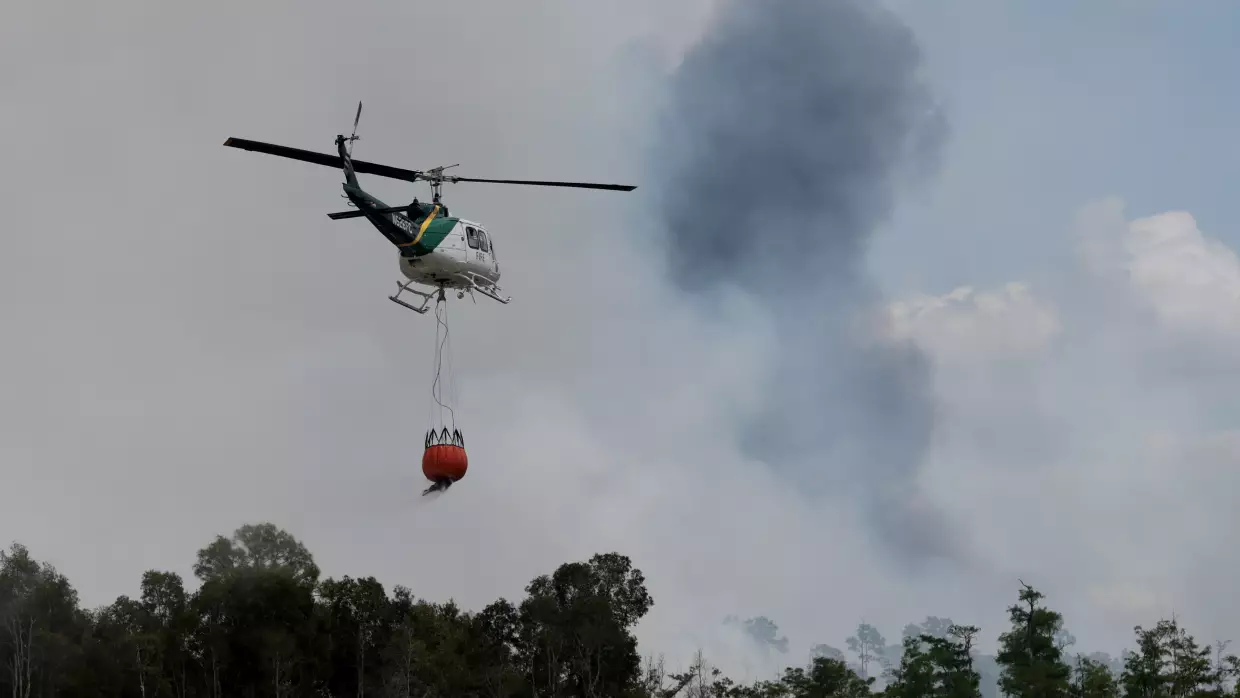
EMILY FENG, HOST: Wildfires - they are dangerous and costly. Boulder County, Colorado, experienced this firsthand when firefighters across the state responded to the most costly wildfire in its history.
(SOUNDBITE OF ARCHIVED RECORDING)
UNIDENTIFIED PERSON #1: Sorry, you're advising that the hotel is engulfed or in - on fire?
UNIDENTIFIED PERSON #2: That's affirmative.
UNIDENTIFIED PERSON #1: And are you asking for additional resources, or are you saying that we can't do anything?
UNIDENTIFIED PERSON #2: This could be a loss.
FENG: The Marshall Fire swept across drybush and eventually burned more than 1,000 buildings, changing the way the state prepares for wildfires.
(SOUNDBITE OF ARCHIVED RECORDING)
UNIDENTIFIED PERSON #3: Turn around and go back now.
UNIDENTIFIED PERSON #4: (inaudible).
UNIDENTIFIED PERSON #3: You have to go back. We're not going that way.
BRIAN OLIVER: When you get a fire, there is an expectation of the community that the fire department is going to go do something about it.
FENG: That's Brian Oliver, the city of Boulder's Wildland Fire Division Chief.
OLIVER: Where the rubber meets the road is the work we do before the fire - mitigation work, making that house less combustible, removing fuels.
FENG: Across the country, wildland firefighters like Oliver are staring down what could be one of the most severe fire seasons in recent history.
OLIVER: Unless we get lucky with a really big summer storm or a lot of big summer storms across the West Coast, we've got a landscape that has dried out especially early in the year and just waiting around. And so the potential for a big fire season is high.
FENG: Park Williams is a professor at UCLA. He studies wildfires and how climate change affects them. And while he says we cannot predict what the future will hold, he says the agencies that keep people safe from fire need to be ready.
PARK WILLIAMS: The window for safe burning is rapidly closing.
FENG: He means prescribed burning, intentionally letting a fire burn to thin out fuels - things like vegetation, sticks and logs that catch fire - in order to prevent more dangerous blazes.
WILLIAMS: If we don't want fires to be growing so large that they have catastrophic consequences for people and ecosystems, then the best tool that we have at our disposal is large prescribed fires. And yet, it is very expensive and very politically challenging to carry out large prescribed fires.
FENG: Both the Biden and the second Trump administrations have shied away from encouraging prescribed burning. In 2025, the Forest Service burned only about half of the acreage that it did in both 2024 and 2023, according to an NPR analysis of agency records. But a brand new federal agency is deciding how to balance those priorities, and that's the Wildland Fire Service.
BRIAN FENNESSY: We're looking at, you know, temperatures that were unseasonably warmer than usual - in fact, I think in the West, record-setting. We're dry, and we're expecting the pace to pick up significantly here anytime.
FENG: Brian Fennessy is the new head of the Wildland Fire Service. The service is the product of an ongoing Trump administration effort to combine all the agencies that fight fires into one big agency. Fennessy says he's preparing for the dry season ahead.
FENNESSY: We're trying to bring on additional aircraft and bring them on early. A lot of our crews, we're bringing on early to address the situation on the ground.
FENG: I spoke with Fennessy to get a better understanding of those preparations and because of a new policy the Wildland Fire Service has been instructed to carry out this summer - prioritizing putting out fires over trying to prevent them with prescribed burns.
One of the things that intrigued me is one of the chief debates surrounding this fire season and also your agency is this April, your boss, the Interior Secretary Doug Burgum - he sent out in a memo that your agency should put out every fire that starts on public lands. And to me, a non-firefighting expert, that sounds like an obvious thing to do.
FENNESSY: (Laughter).
FENG: Why is that a controversial request, though, and do you agree with him?
FENNESSY: Well, I do. Absolutely, I agree with him. And I think if you just use that one statement, it can be taken out of context. But his intent is really, you know, we need to put out these fires when it makes sense to do that. And when people ask me, Emily, what my highest priorities are, you know, beside firefighter health and wellness, really it comes down to, you know, treatment of the landscape. It's not necessarily suppression.
The landscape is not in a healthy condition right now. That's a part of why we're seeing some of these large fires like we do today because, quite frankly, you know, full suppression took place for decades and is one of the reasons why we're in this situation now. You know, our priority is to put more fire on the ground where it makes sense, during the times of the year it makes sense. We have to be very aggressive about it, and we have to be doing it on a regular basis.
FENG: So from what I'm hearing, with the focus on suppressing fires, putting them out, do you feel like there isn't enough being done by the federal government to remove that dry vegetation and prevent new fires?
FENNESSY: No. In fact, conversely, that is a top priority for not only our agency, but for the U.S. Forest Service and both the Secretary of Agriculture and the Secretary of Interior. And we're doing, you know, all we can do. We're doing it even more aggressively than we have in the past, and we plan on doing it even more in the future.
FENG: My colleague Lauren Sommer looked at Forest Service data just a couple of days ago, and she's found that the Forest Service burned only about half of the acreage that it did in the two years prior, according to those agency records. Why has that work fallen behind this year, then, if it's still a priority?
FENNESSY: Well, you know, I can't speculate. I don't have the Forest Service data, and I certainly don't want to speak on their behalf. I really don't know.
FENG: American firefighters, as you know from your decades of experience fighting fires - they've gotten better. They've gotten really good at putting out wildfires and suppressing fires over the past century. But at the same time, the size and the severity of those fires has also increased. Is there something that we're doing wrong right now, in your opinion?
FENNESSY: No, I don't believe we're doing anything wrong. And it - you go back to the early 1900s, there was a rule called the 10 a.m. policy, that all fires would be extinguished - forest fires, brush fires - would be extinguished by 10:00 a.m. the next morning. And we were really, really good at it. What we didn't realize back then is we were creating a problem that we're dealing with today. They have a lot of fuel on the ground. I'll just stay back. A lot of vegetation - that's what we're trying to deal with right now.
And really the best way to deal with that - to treat this landscape, as I keep going back to - is spending, you know, every day treating the fuel on our landscape - whether that's removal, whether that's a prescribed fire, whether it's mechanized treatment. But that is our priority.
FENG: And what do you have to say - what advice do you have for millions of Americans who live in fire-prone areas? - because very soon - you know, the end of this month, the start of June, as well - is generally considered the start of fire season in many, many states. What advice do you have for them?
FENNESSY: The advice I've been giving for many, many years is, you know, you need to be prepared. Everybody - It's not just a fire service problem. One of the things I tell people all the time - it's everybody's problem. I don't care if you live in a high-rise condominium in some metropolitan area, wildland fire can affect you. If businesses are shut down, if you're smoked in, you have all these things, it will affect every American. And so we need to be prepared.
FENG: Brian Fennessy runs the Department of the Interior's Wildland Fire Service. Thank you.
FENNESSY: Thank you, Emily.