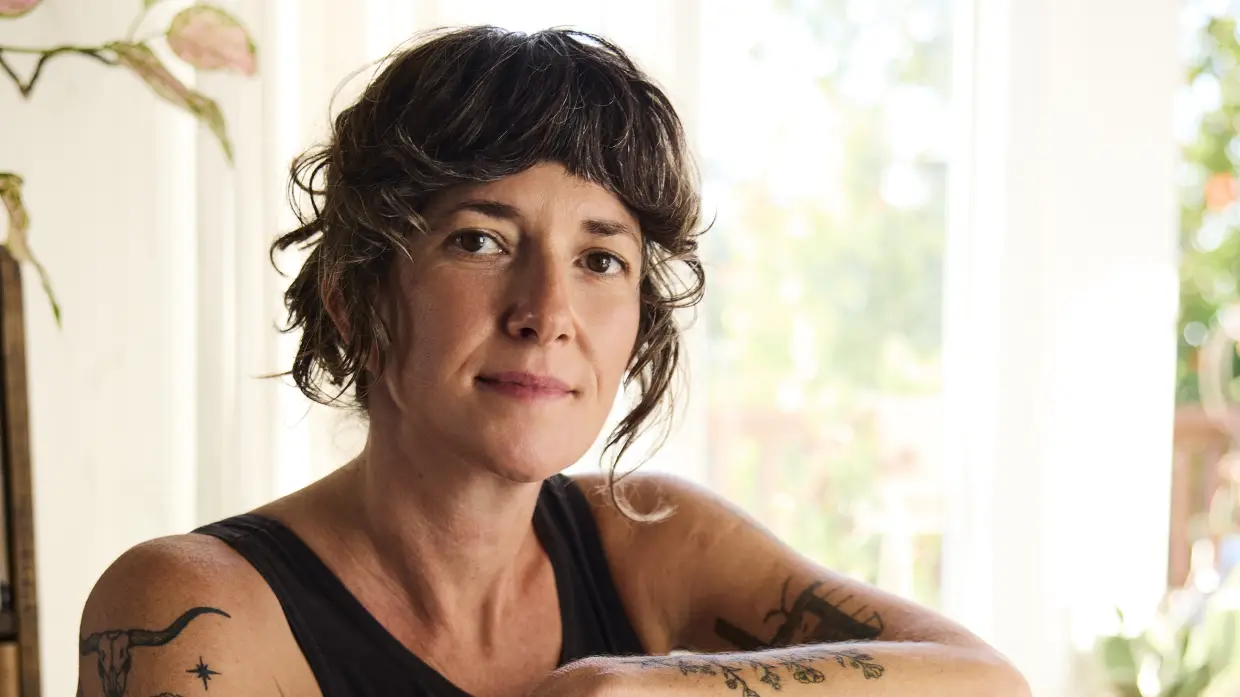
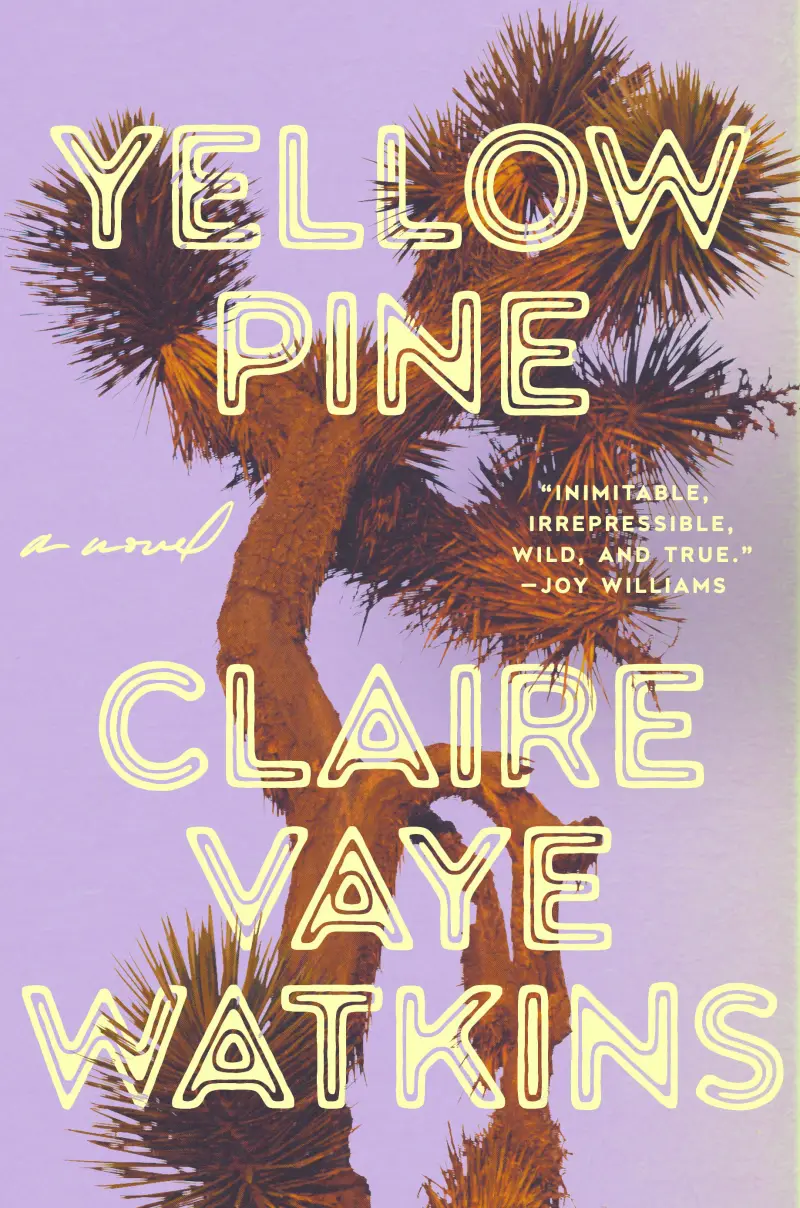
TERRY GROSS, HOST: This is FRESH AIR. I'm Terry Gross. Like the main character in her new novel, Claire Vaye Watkins lives in the Mojave Desert near Death Valley. Also like in the novel, the desert around her is being developed by an energy company for solar energy. Solar might sound like clean energy, great, but solar on this grand scale is wreaking havoc on the desert ecosystem. Like many frontier territories, the desert attracts misfits, loaners, drifters and, as Watkins puts it, weirdos. In the new novel, each of those types is represented in a small community of people protesting the, quote, "green energy gold rush." But really, what can they do? What power do they have to defeat a corporate project already underway? Is protest futile, delusional, self-serving? There's a lot of questions this novel raises, like, how could a mother decide to live in the desert when her ex-husband and child have moved across the country for a better job and better schools? How has Rose, the new novel's protagonist, been shaped by having had a mother, father and step-father who were each addicted to alcohol or drugs? Twelve-step programs have always been part of her life as a witness or participant. Watkins' new novel is titled "Yellow Pine." That's also the name of the solar desert project in the book.
Her previous novel, "I Love You But I've Chosen Darkness," is her most autobiographical book, and quotes from the memoir "My Life With Charles Manson" by her father Paul Watkins. The cover describes Paul Watkins as Manson's No. 2 man. His role was procuring teenage girls, recruiting them to join the Manson family. Claire was 6 when her father died of cancer.
In reviewing her new novel, former Washington Post book critic Ron Charles wrote, among the swelling collection of books confronting our imperiled planet, Claire Vaye Watkins' fiction remains defiantly alive. Her stories and novels are rooted in the American West, that awesome expanse of dunes and deserts that uninformed observers would call empty. Where life has adapted to the damning conditions of heat and drought, Watkins finds characters burned away to their elemental anxieties and desires.
Claire Vaye Watkins, welcome to FRESH AIR.
CLAIRE VAYE WATKINS: Thanks, Terry. Happy to be here.
GROSS: Happy to have you. So it's too hot, I would imagine, to be in the desert during the summer, so where are you staying for the summer?
WATKINS: Yeah. It is too hot. I'm staying in Orange County. I split my time between there and the desert. I think this is the first summer of my life that I haven't spent significant time out in the Mojave. So, yeah, it's a bit sad.
GROSS: Can you describe the part of the desert that you live in and what the environment is like?
WATKINS: Sure. I live in the eastern Mojave Desert, about halfway between Las Vegas and Death Valley in a little town called Tecopa, where I grew up. It's not for everybody. It's about a hundred people.
GROSS: That will be the understatement of the interview.
(LAUGHTER)
WATKINS: Yeah. It's for about 100 people, you know? And it's really beautiful. Just, like, staggeringly gorgeous landscape and scenery. Huge, huge mountain ranges. There's a little river that goes through the town, the Amargosa River. It's mostly underground - a subterranean river - but it surfaces in these hot springs. And there's just this, like, explosion of life around the river. Yeah. It's...
GROSS: What kind of life?
WATKINS: Well, pretty much anything you can imagine - birds, bats, insects. Each hot spring has a lot of endemic species, so living creatures that only live right there. Each of them has a little pupfish. Most charismatically, probably desert tortoises, and then less charming creatures, like gigantic black, biting horseflies. Yeah. It's a very alive, very biodiverse place.
GROSS: So where you described, it's also around where you grew up, and it's also where the main character of your new novel lived. So now I want you to describe how it's being developed.
WATKINS: Yes. So the vast majority of land in this part of the country is public land. So it's owned by, in theory, all of us, but it's administered by the federal government. And it has been sort of in the crosshairs, I would say, of what boosters like to call the green energy gold rush. So it's extremely sunny. It's a good place for solar development in theory, for that reason.
It's also kind of being besieged by other types of energy development like geothermal and mining. I mean, mining has been happening out there for a really long time, although the scale is getting bigger and bigger. The aquifer has been pretty dramatically depleted, and, you know, there's not a lot of water in this area to begin with in the best of times. So the natural resources are really being pushed to the brink in a pretty dramatic way. And there's been a long, long history of environmental injustice.
You know, Yellow Pine and where I live is not far from the Nevada test site, where the federal government detonated almost a thousand nuclear bombs until 1992, when I was about in the third grade. So it's a place that's been, like, treated like a wasteland for a really long time, and that story has been very cooperative and convenient for extraction and exploitation of the natural resources.
So I was worried that while I'm really - I feel really convinced that we need to decarbonize the economy, and the need for renewable energy is obvious to me, I was really concerned that there would be some really serious sacrifices being made that didn't seem right to me or fair and that I don't think will actually help us transition off of fossil fuels.
GROSS: So in the novel, there's a small group of protesters who want to stop this development of the desert. But the novel really does ask the question, like, what's the point? They're not going to win. There aren't a lot of people around to watch. There's not a lot of media around to report it. They're in the desert. So what are your thoughts about that?
WATKINS: Well, yeah. I think at one point, they say, you know, it's not a blockade 'cause we're not delusional, but they are still very principled. You know, they can tell that this is wrong. And so it, I think, is a matter of morality, taking action even though you don't have a real grounded expectation of being successful. I think there's still value in the action to watch and witness and be able to say that you saw what was there. I mean, that's what drove me out to Yellow Pine was that I wanted to be able to say that I saw it before it was gone.
And I guess I kind of just feel like if you only engage in an action that you're certain is going to be successful, that's pretty cowardly really. You know, I mean, we want to be strategic and effective as activists, but there's no guarantee in any of this stuff, and that doesn't mean it's not still a worthwhile way to spend your life.
GROSS: As you mentioned, you grew up near where there were a lot of atom bomb tests and also near where there's a big disposal site for nuclear waste.
WATKINS: Yes.
GROSS: So how aware of that were you when you were growing up?
WATKINS: I was painfully aware of it. I was - I don't remember a time when I ever didn't know about Yucca Mountain, that nuclear repository that you're referring to. I mean, and that's another win. You know, there's a lot of very gnarly waste going into that mountain today, but not nuclear waste because of people stood up and said, no, you know? So, yeah. I - my parents were involved in activism against nuclear testing and against Yucca Mountain and against water projects. And I remember feeling really hurt by it as a kid, feeling like, so they think that's OK to do to me? Like, I'm just a kid, you know? It made me feel like we were expendable people or that we didn't matter. I mean, that was - that's the story, usually, of this type of exploitation is, like, there's no one there anyway. It's a empty place, you know? And that it's already dead. And that's a really confusing thing to be told when you're a lively kid, who - you know, I understood that that was wrong, and I didn't deserve it. And I - no one does. And, yeah, I had a sense of clarity about it that I don't really think has gone away.
GROSS: Were you able to hear the blast go off? Like, did you know when it was happening, and were you warned by the government when it was happening?
WATKINS: So by the time I came along, the detonations were underground. They were happening in a subterranean way, which was ostensibly better because it wouldn't be, you know, releasing...
GROSS: ...Directly into the atmosphere. Yeah.
WATKINS: Exactly. Yeah. But the problem is, of course, that that's where the water is there, is underground.
GROSS: Oh, right.
WATKINS: Yeah. So, no, I didn't hear them or see them. My mom had - as a kid, she would go up on the roof of her trailer. She told me stories about going up there, and they would put, like, sunglasses on to be safe.
GROSS: Oh, God.
WATKINS: (Laughter) You know? And, yeah, my grandma worked in casinos and atomic tourism was, like, a part of our life.
GROSS: What's atomic tourism?
WATKINS: Atomic tourism is the most amazing coping mechanism that the people of southern Nevada came up with to deal with the fact that their own government was bombing them. It was a phenomenon where people would come to Vegas to watch the detonations and people would dress up as, like, atomic bomb girls. There were showgirls who had, like, mushroom cloud headdresses, and there would be parties to - like, bomb detonation watch parties up high in the casinos. There's still a lot of, like - I don't know - it's almost like the culture sort of metabolized this, like, ghastly, like, deeply wrong phenomenon into a tourism gimmick. It's incredible.
GROSS: It is incredible. Yeah. You have cancer in the family, maybe as a result of it. Like, you write that your father probably died from the mining or from the atom bomb tests.
WATKINS: This is the thing with environmental injustice, which is kind of a wonky academic phrase. But the way I understand it is it means you get less life, you know, that there are some people who get more time on this earth than others. Some people are expendable in that - in this model that we have and we think we can kind of cordon it off. It's what activists are talking about when they talk about a sacrifice zone. Yeah, we have this myth in America, I think, that, like, we can do this stuff elsewhere. Like, war is something we do elsewhere. And - but it - we do it to ourselves, too, you know, when we hurt the land and the air and the water, we're hurting ourselves. So, yeah, he could have got it from a number of shenanigans, but at the end of the day, he only lived to be 40 years old.
GROSS: Well, let me reintroduce you here. If you're just joining us, my guest is Claire Vaye Watkins, and her new novel is called "Yellow Pine." We'll be right back. This is FRESH AIR.
(SOUNDBITE OF THE UNICORNS' "TUFF GHOST")
GROSS: This is FRESH AIR. Let's get back to my interview with novelist Claire Vaye Watkins. Her new novel is called "Yellow Pine." So you described how living in the desert means living with death all around you. And I want to say that I grew up with westerns on TV and westerns in the movies. And one of, like, the common themes, one of the common plot points in westerns is that somebody is kind of trekking through the desert and they're lost and they're parched and they're on the verge of death, and buzzards are flying overhead or the villain has dragged the hero into the desert and left him or her there to die, and they're parched and, you know, starving and buzzards are flying over. So I don't think that's what you mean (laughter) when you say there's death all around you in the desert. So what do you mean? What is dying all around you?
WATKINS: Well, it's not that dissimilar from those tropes, you know? I think to be a small, you know, barely upright, hairless mammal walking around in that climate can be really scary, and it does make you feel like, oh, I could die out here, you know? It's not - we're really not that far away, you know? Your air conditioning, your car overheats. You're on the side of the road, and it's 120 degrees. There will be buzzards circling. And I think there's something primal and immediate about that.
And I think I was exposed to it mostly because my mom ran this little museum and rock shop on the edge of Death Valley, and a lot of tourists would come through, especially European tourists. Maybe they had seen some of those westerns that you had seen and wanted to have a Death Valley adventure. And my mom used to say that it was her job to save the European body from the European imagination.
GROSS: (Laughter).
WATKINS: And I would listen to her, and occasionally, people would go missing, and I would listen to the dramas of someone not making it, which happens pretty regularly out there. It's an extreme place.
GROSS: Did you ever get lost in the desert and worry about dying of thirst?
WATKINS: Yeah. I have, actually. I got a pretty mild heat stroke once when I was in Joshua Tree, of all places, the most, you know, gentrified part of the Mojave Desert. Forgive me, Joshua Tree. I love you. But I just got really hot. And I was on a short walk, not very far from my car at all, in a place I could have thrown a rock and hit someone's house, probably. I was really not out in the wilderness, but I got so disoriented. And heat does something really wild to your brain, and I was kind of not sane and couldn't find the path back to my car, and everything starts to sort of look the same. I got really disoriented and really panicked. And luckily, it didn't last that long. But, yeah, I've been confronted with how quickly it can happen.
GROSS: On the opposite side, like, Jesus and Moses spent significant time in the desert. I mean, Moses got the Ten Commandments in the desert. Jesus, like, fasted for 40 days and 40 nights and was tempted by Satan. And I'm wondering if living in the desert has affected your sense of divinity.
WATKINS: Yeah, it has. I wasn't raised religiously or even very spiritually at all, so I came to that on my own, later in life. I was given the gift of desperation (laughter), as they say...
GROSS: (Laughter).
WATKINS: ...And just needed help. Like, I had this - I came to this point in my life where I felt like I had kind of exhausted all the, like, intellectual, secular, educated ways of living and I needed something a lot, lot older. And when I'm in the desert, I can feel a feeling of being a part of something bigger than me, which is how I think of the divine. I can really appreciate that I'm a part of this living land, and I give it something and it gives me something, even just thinking about my breath. And these dark times have driven me to Buddhism lately, so I have that practice to kind of draw on. And I've done yoga for a really, really long time.
So - but, yeah, I think I think that that must be true everywhere - that there's a divine part of me in all of this, but it becomes very, very clear for me out in the desert. And that's why I need to keep going out there.
GROSS: So on the one hand, you're living with death all around you, and on the other hand, you're experiencing this new sense of divinity, living in the desert. So those are both connected and opposite at the same time.
WATKINS: Yes (laughter).
GROSS: And in your new novel and in your previous novel, you write a little bit about living in the face of imminent death. And in the new novel, the main character's boyfriend describes how he used to dangle off of a cliff without a rope to feel the presence of God. And he describes it as a meditation that focuses you 'cause you can't think of anything else but your body and the rock. You feel your breath, you feel the wind on your body. So it brings you back to your body and it makes you in the world.
In your previous novel, "I Love You But I've Chosen Darkness," you write about a boyfriend, Jesse lived like he was dying. Take it from me, you do not want to live with someone who actively lived like he's dying.
(LAUGHTER)
GROSS: So can you talk about both sides of that? You know, the downside of living like you think you're dying and the sense of exhilaration...
WATKINS: Yeah. Yeah, I mean...
GROSS: ...And why you thought about this in the first place.
WATKINS: Well, I thought about this probably because my first memory is my dad dying when I was 6. That's really, like, where I begin in my story. I mean, he was sick with cancer for a few years before he died. And I don't really remember having a time where death wasn't a - really a presence in my family - you know, that his absence, like, changed everything. And I've come to feel pretty grateful for that, actually, because I have not - I mean, I've made mistakes and lived foolishly as much as anyone has, but I have been gifted with not being quite, perhaps, as in as much denial of the fact of death as I might have otherwise been.
I don't know. Our culture is so weird about death. It's like they're opposite hands but they're the same hands because there's - I don't know. As far as I can tell, there's a part of us that is, you know, infinite and divine, like we were talking about, and then there's a part of us that's very finite and only here for a little while, as far as we know. And we're in this body, and I felt really grateful for that. And it makes me want to live a good life.
GROSS: Well, we need to take a break here, so let me reintroduce you. If you're just joining us, my guest is Claire Vaye Watkins. Her new novel is called "Yellow Pine." We'll be right back after a short break. I'm Terry Gross, and this is FRESH AIR.
(SOUNDBITE OF RY COODER'S "NICE BIKE")
GROSS: This is FRESH AIR. I'm Terry Gross. Let's get back to my interview with Claire Vaye Watkins. Her new novel, "Yellow Pine," is about a woman, Rose, approaching the age of 40 who, like Watkins, lives in the Mojave Desert. Rose joins a group of people - misfits, weirdos - protesting an energy company's giant solar project wreaking havoc on the desert ecosystem. Rose has also chosen to live in the desert while her ex-husband actually moves to Philadelphia to accept a better job.
And after they agree their daughter would be better off in a Philly preschool, their daughter moves to Philly, too. A painful separation for Rose, but not quite painful enough for Rose to move, too. When the novel begins, Rose is working for an environmental group that she considers part of the nonprofit industrial complex.
So in each of your last two novels, the main character decides to live far away from her young daughter. In the new novel, the couple has been living in Nevada, but they've been growing apart. They divorce. The husband gets a job in Philly close to his parents and his sister. And they agree it would be best for the daughter to go to preschool there in Philly. But Rose stays out West, moves to the desert and works in a fundraising job with an environmental group.
She's kind of relieved to be away from her ex because they've been drifting so far apart. But it's painful to be away from her daughter. In your previous novel, "I Love You But I've Chosen Darkness," the main character goes to the desert where she grew up and decides to stay and leave her husband and their young daughter behind if they don't want to stay in the desert. What got you thinking about what it means to live far away from your young child?
WATKINS: Well, I live far away from my own young daughter for most of the time. She's with me on breaks and on summer vacation. So that's a sacrifice that I've chosen to make. And I think it's for her good. I think it's for the greater good, the good of the family system. And I think it got me thinking about right sacrifice and wrong sacrifice, you know?
Parents have to sacrifice for their kids. And I also notice that when there's too much sacrifice, it can get pretty dark. You know, we get into territory of, like, martyring ourselves or not living our lives in the name of our kids, you know? And it's so much pressure for a kid to have to bear. Like, they didn't ask for that. They didn't ask to be born, you know? So I'm just interested in the process of a parent letting go, and in the case of in the book, you know, trusting that the other parent is trustworthy and has got it. And I'm really lucky that that's my situation.
GROSS: If you're comfortable talking about it, can you talk a little bit more about what the process was like of making the decision that this was a good sacrifice and that it was good for the family?
WATKINS: You know, I think I would probably rather talk about Rose's approach to it.
GROSS: Sure. That's the main character in your new novel.
WATKINS: Right. Yeah. So for Rose, you know, the decision is a mixture of good reasons and maybe some bad reasons. Like, she's pretty guilty. At one point, she describes herself as being sopping with guilt when the decision needed to be made. But she has some good reasons, too. She feels, like, called to defend the land where she lives. She feels that that's a meaningful purpose. And to have a parent that has a meaningful life, I think, is a great gift. To have a parent that is still, like, a full-fledged, whole human being, which is what Rose is trying to do, I think that's really, really important for kids.
GROSS: So your previous novel, "I Love You But I've Chosen Darkness," starts with this postpartum questionnaire. And it's a multiple-choice questionnaire. I want to read some of the questions. One - since my baby was born, I've been able to laugh and see the funny side of things, A, as much as I ever did, B, not quite as much now, C, not so much now, D, not at all. Two - I look forward with enjoyment to things, A, as much as I ever did, B, not quite as much now, C, not so much now, D, not at all. And so on. And so Rose comes up with answers in essay form to all of these, like, ABCD multiple-choice answers. She counters it with her own real answers. So did you have to take a survey like that?
WATKINS: I did, yeah.
GROSS: Questionnaire? Yeah?
WATKINS: Yeah. That was the first piece of writing that I did that became that book, "I Love You But I've Chosen Darkness." When my daughter was born, I took this questionnaire. And I found the language just very confusing and baffling and funny, accidentally funny, unintentionally funny, I thought. So, yeah, then I thought, well, this should be an essay test. And then I started writing these little essays in response to the questionnaire. My doctors definitely described me as having postpartum depression. And, you know, I followed their advice accordingly. But I don't really think that's exactly what was happening.
I think I was having a kind of an existential crisis. I think it was like a spiritual confrontation with myself. Having had this child and doing something really, like, heroic, a lot of the other stuff that I was doing in my life sort of suddenly seemed really meaningless. And the things that had given me a sense of purpose, like striving in my career, they just suddenly seemed absurd.
GROSS: Can you say more about what this was about, this existential crisis?
WATKINS: I was a really ambitious young person. And I was striving a lot to do everything in the right way and in the right order. Like, I was a straight A student. I did really well in school. It helped me get out of my kind of crazy family scene. And I was kind of in a survival mode, I think, looking back on it, you know, using, like, my education and eventually my profession, like, as a university professor to get safe, and even using intimate relationships as a way of getting safe. And then all of that was kind of culminated in having this child.
And I think I was telling myself a type of, I don't know, almost like a messianic story, where, like, once I arrive at this place and I'm middle-class and I have a husband and a child, all will be good. And it wasn't. And I was still myself. And I still had - I had, like, deeper stuff that I needed to confront that couldn't - the, you know, solution wasn't outside in, like, external validation or money, or prizes, or prestigious jobs. It had to, like, come within. So when she was born, that was really the beginning of me starting to, like, dig in deep with myself. And just I think the way Mary Oliver phrases it is, like, live your one precious life.
GROSS: Well, let me reintroduce you here. If you're just joining us, my guest is Claire Vaye Watkins, and her new novel is called "Yellow Pine." We'll be right back. This is FRESH AIR.
(SOUNDBITE OF CARL VERHEYEN SONG, "GOOD MORNING JUDGE")
GROSS: This is FRESH AIR. Let's get back to my interview with Claire Vaye Watkins. Her new novel is called "Yellow Pine."
I want to ask you about your father because he joined the Charles Manson Family. And for people who don't know Charles Manson - and some of our listeners might be too young to have, like, seen documentaries or read books about him - but why don't you describe Manson?
WATKINS: Most people would probably describe him as the leader of a cult - a cult of young hippies who were, as Joan Didion says, participating in the paranoia of their times. And eventually - spectacularly so - it culminated in these murders in Los Angeles in 1969. And my dad was a teenager. For him, in the beginning, The Family was all about music and sex and drugs. And he'd come from a pretty gnarly household, and I think...
GROSS: Your father?
WATKINS: Yeah. And Manson too, not incidentally. Yeah. So, yeah, he - Manson was a lot older than most of them. A lot of them were young women. A lot of them had - those women, the girls, and some of whom eventually committed the murders - they had been, like, given to Manson as children. So it was a really exploitative scene, it sounds like.
What I would say to people if they're not familiar with him, he became this, like, boogeyman that showed the culture - Joan Didion described it - the day of the Manson murders - as the day the '60s ended. And it became this fable, this allegory, about how, like, the countercultural impulse was dangerous and could only lead to, you know, murder and mayhem. And it scared a lot of people off of the kind of thing that the hippies were up to, and it gave their enemies a lot of ammunition.
GROSS: Well, Manson used the whole, like, free love, sex, drugs and rock 'n' roll kind of thing to totally exploit women - young girls, teenagers who had just come to California, who'd maybe run away from home, who had no direction, they just knew they had to get away. And so, you know, he would know how to flatter them and take them to his home and use them sexually. And then apparently, your father, because of music, started playing with Manson 'cause your father played and Manson played. But then your father - as Manson grew, like, darker, your father became his procurer. He was the one who found the teenage girls and brought them into the Manson cult. And I think it's fair to call it a cult.
So, like, how much of that did you know when you were growing up? I know your mother told you some and then you and your sister learn more about, you know, like, Manson and your father from books like Vincent Bugliosi's "Helter Skelter." But how much did you really know? And I should say, your father was not involved with the murders. He wasn't even in town...
WATKINS: Yeah.
GROSS: ...I think, at that time.
WATKINS: Yeah, he was out in Death Valley. So that's kind of where the mythic, like, presence of the desert in our family - it was almost as if, like, the desert saved him from being involved. And Manson was the one who first sent him out to the desert to find a hole for them to wait out Helter Skelter in, you know? And that's a really good point about - there's nothing really countercultural about Charles Manson, maybe except for that he liked to do drugs. But, like, he was very sexist, very, very racist, you know, and...
GROSS: And he did some time in prison.
WATKINS: A lot of time.
GROSS: Do you know how your father ended up being Manson's procurer of teenage girls?
WATKINS: Well, the way my mom told it, it was because he was very good-looking (laughter). And he was young. He was, young enough to enroll - he enrolled in Pacific Palisades High School briefly to meet women. It sounds like - in my dad's book, he writes about - and it's a tricky thing 'cause it's a cowritten book. I don't know how much of this is actually him, and he's not around for me to ask, you know? But he writes about it as being just, like, a wonderful time for a kid who's, like, come of age in a really violent, repressive, like, 1950s abusive, scary house.
GROSS: Your father turned against Manson and was one of the main witnesses who testified against Manson. Do you know how he decided to do that?
WATKINS: When he wanted to leave The Family, at first, Manson said, OK, that's fine. Then he changed his mind and they were in, like, a power struggle for a while. And they were out in Death Valley at the ranches. And eventually, there was a night that he describes in his book where he opened the door of the cabin where he was staying with a couple other people who had also defected from the group, and Manson was, like, squatting there with a knife between his teeth. And so he thought he would be killed. And he walked that night across Death Valley, basically. Probably around, like, 50 miles or so. But he fled for his life and then went to the police - went to the Inyo County Sheriff's. And I think he was trying his best to get safe.
He had heard about the murders. About that point, people had been kind of, like, gossiping or alluding to them. But I think he was just, like, getting, you know, a very, very hard reality check and realizing that this was not the, like, loving, paternal guru that he thought he had.
GROSS: What did your mother know about his involvement with the Manson family when they met and fell in love?
WATKINS: You know, my grandma met my dad first, the night before. He was a bartender and she had gone out to the bar. And I think she told my mom something like, there's a really cute bartender out there. He was in some cult, but he's really cute (laughter), and you should go and, like, chat him up. And my mom did that. And my understanding is they talked about it right away. I think everybody in town pretty much knew.
GROSS: But she was OK with it?
WATKINS: Yeah. I think she understood that people make mistakes and can be lost. I mean, she'd definitely, like, made her share of mistakes. I think some of this was that eventually they got involved in, like, 12-step recovery, you know, where you are - part of the medicine from recovering from addiction is to be honest. So I think they had a pretty profound philosophical and spiritual tradition that was helping them navigate the complexities of what - I mean, that's just being a human.
GROSS: I want to ask you about solitude. As you write, there's a difference between solitude and being lonely. What do you like about solitude? And were you always comfortable being by yourself?
WATKINS: Yeah. I started surfing recently. So I'm like - I got a lot of surfing metaphors going on. You really got to kind of try to, like, stay in the pocket of not becoming isolated or too lonely or misanthropic, which is a risk for me, feeling like other people are bad, like a malevolent force that I want to avoid. I don't like it when I get into that way of thinking. Ideally, solitude helps me be with others, but I have to be able to retreat from them. I also - you know, most of the peopling I do is in reading and in books. And I have to remember that those aren't real people either (laughter), you know? As real as they can seem.
GROSS: Do you feel that one of the downsides of being with other people is comparing yourself to other people, fearing you're coming up short or feeling like you're competing with them in some way?
WATKINS: Yeah. That's a real hazard. I mean, comparison, I think, especially for an artist, I think it's pretty much useless. You know, I try not to do it at all. I've had times in my life where I have kind of been on a, like - comparison is like a drug I'm trying to kick. Because I'm me, you know? I'm me. I really - for some reason, for me, it's Zadie Smith. I want to be like...
GROSS: (Laughter).
WATKINS: ...Why am I not doing what Zadie Smith is doing? And it's like, well, you're Claire, babe, you know? Zadie's going to Zadie, and George Saunders is going to George Saunders, and you just do Claire. You know, that's enough. I feel best when I can inhabit that and let everybody else just do their own thing, too.
GROSS: It's been great to talk with you. Thank you so much.
WATKINS: Likewise, Terry. Thanks for having me.
GROSS: Claire Vaye Watkins' new novel is titled "Yellow Pine." After we take a short break, TV critic David Bianculli will review the new series "Furious," created by Elizabeth Meriwether, who also created "New Girl," "The Dropout" and "Dying For Sex." This is FRESH AIR.
(SOUNDBITE OF DOC CHEATHAM AND NICHOLAS PAYTON'S "OUT OF NOWHERE")